
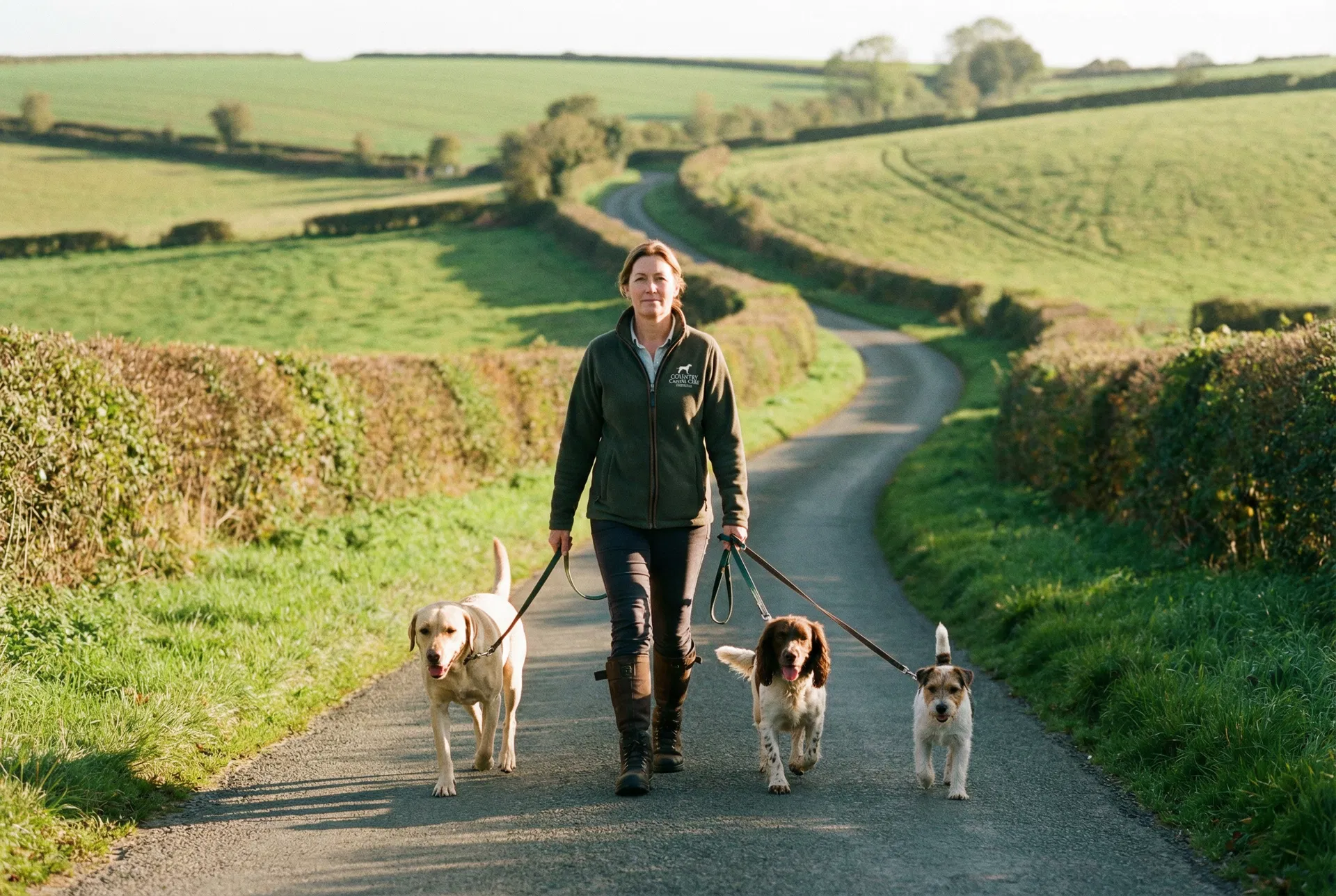
Dog walking in the UK is not licensed nationally.
But it is not unregulated.
If you take payment to walk dogs, you are responsible for:
- control
- safety
- animal welfare
- legal liability
- compliance with local restrictions
For a focused answer, see Do You Need a Licence to Be a Dog Walker in the UK?
Trust is the job
Dog walking is built on trust.
- The dog must trust you
- The owner must trust you
- The public must trust you
Everything else sits on top of that.
Lose trust, and everything else follows.
What dog walking actually involves
Dog walking means:
- managing both solo and multiple dogs
- controlling behaviour in real-world environments
- making decisions quickly
- handling risk in public spaces
It is not just walking dogs.
It is maintaining trust in situations where things can go wrong quickly.
Legal reality
Dog walking is not nationally licensed.
But it sits within a wide legal framework, including:
- Animal Welfare Act 2006
- Animals Act 1971
- Dangerous Dogs Act 1991
- Dogs (Protection of Livestock) (Amendment) Act 2025
- Anti-social Behaviour, Crime and Policing Act 2014
- Control of Dogs Order 1992
These laws are not background noise.
They are part of the framework you operate within.
What dog walking actually means in practice
Professional dog walking is not just about exercise.
It is about:
- making safe decisions
- judging risk properly
- maintaining control
- protecting welfare
- upholding trust
Where people get caught out
Most problems come from:
- lack of control
- poor judgement
- overconfidence
- ignorance of legal and practical risk
How many dogs can you walk?
There is no fixed national limit.
Your numbers depend on:
- local restrictions
- landowner permissions
- insurance terms
- your own ability to maintain control
For the full explanation, see How Many Dogs Can You Walk at Once (UK)?
Insurance
There is no single national rule requiring every dog walker to hold insurance.
That said, operating without it is reckless.
At a minimum, you should have:
- public liability insurance
- care, custody and control cover
- transport cover where applicable
For the full breakdown, see Dog Walking Insurance (UK)
Risk and safety
This is where the real exposure sits.
You must manage:
- roads
- livestock
- public interaction
- group behaviour
- changing environments
For more, see Dog Walking Risk Assessment (UK)
What makes a professional dog walker?
If you want to understand what separates a professional dog walker from everyone else, read:
Getting clients
Clients are not buying a walk.
They are placing trust in you.
They are trusting you to:
- handle their dog safely
- make good decisions
- represent them properly in public
- deal with problems calmly and competently
If trust is weak, clients do not stay.
Pet pop-ins and pet sitting
Pet pop-ins and pet sitting are usually lower exposure than group walking.
But they still require:
- structure
- insurance
- responsibility
- trust
For more, see Pet Pop-Ins and Pet Sitting (UK): Legal, Insurance and Safety
Reality check
Dog walking has:
- a lower barrier to entry
- higher real-world responsibility than many people realise
Once trust is lost:
- with the dog
- with the client
- or with the public
it is very difficult to recover.
This is where most people slow themselves down
They try to build everything from scratch:
- risk assessments
- processes
- documents
- service structure
You do not need to do it that way.
Use structured systems designed for real-world dog walking.
Final position
Dog walking is not a casual service.
It is responsibility, risk, and trust combined.
If you cannot:
- explain what you are doing
- justify your decisions
- demonstrate control
then your setup is not strong enough yet.
Stop working it out as you go.
Build a setup that maintains trust, demonstrates control, manages risk, and stands up under pressure.
Use structured systems, training, risk assessments, and documents designed for dog walking businesses.
Related articles
- Do You Need a Licence to Be a Dog Walker in the UK?
- Dog Walking Insurance (UK)
- How Many Dogs Can You Walk at Once (UK)?
- Dog Walking Risk Assessment (UK)
- Dog Walking Safety: Livestock, Roads and Real Risks
- How to Start a Dog Walking Business (UK)
- Pet Pop-Ins and Pet Sitting (UK): Legal, Insurance and Safety
- What Makes a Professional Dog Walker?